
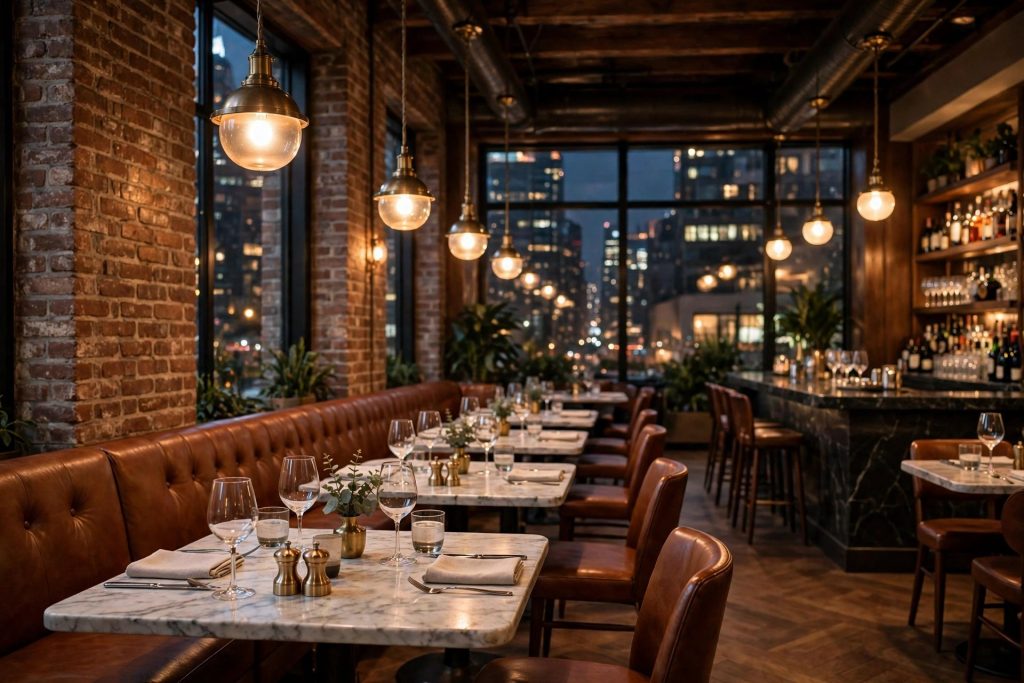
Before choosing a restaurant in the West Village, a café in Astoria, or a wine bar in Brooklyn, diners can use online photos, maps, menus, and reviews to compare venues. A 3D tour on your website lets guests explore the dining room and seating layout before they book. A website tour and Google Street View publishing are separate deliverables: ask whether optional Street View publishing is included in your quote rather than assuming a Matterport website embed will appear inside your Google Business Profile.
A visual preview can show how the dining room connects to the bar, outdoor seating, or a private room. It cannot establish typical noise levels, crowding during service, or current availability. Guests should confirm those details with the restaurant.
Diners Decide Before They Arrive
Search behavior has changed how New Yorkers choose where to eat. A “best ramen near me” or “cozy brunch spots Brooklyn” search usually ends with a map pack, and the listings that hold attention are the ones that show the most. A virtual tour gives guests another way to inspect the space alongside photos, menus, and reviews.
Showing the layout can help guests ask more specific questions before booking. A tour does not guarantee better reviews or establish whether a venue will be quiet on the night they visit.
What a Good Restaurant Tour Actually Shows
A restaurant tour is not a real estate walkthrough, and it should not feel like one. The shots that matter most to diners are:
- The entrance and host stand — so first-time guests know exactly what to expect when they arrive
- The main dining room from table height — the real view a guest will have, not just a wide empty shot
- The bar area — especially for spots that do happy hour, date nights, or walk-in traffic
- Outdoor seating and sidewalk cafés — a huge draw in New York for much of the year
- Private dining rooms and event spaces — the rooms that drive group bookings and celebrations
- Details that set the mood — lighting, artwork, open kitchens, and chef counters
If your space has a story — a wood-fired oven, a garden patio, a chef’s counter — the tour should linger there. Those details end up in reviews and recommendations.
A Tour Works Harder Than Photos Alone
Photos are still essential, but they have limits. A single flattering angle can hide a cramped layout or an awkward table arrangement, and diners have learned to be skeptical. A 3D tour is harder to fake: guests can move through the space themselves, check sightlines, and see how tables are actually spaced.
An accurate tour can reduce uncertainty about the room, but it does not guarantee bookings, attendance, or revenue. Keep the tour current when the layout changes, and measure inquiries and reservations rather than assuming a sales lift.
Private Events Start With the Room
Private dining is one of the strongest cases for a restaurant tour. Someone planning a birthday dinner for twenty, a rehearsal dinner, or a company holiday party needs to see the room before committing — and they are often planning from another borough, another state, or another country.
A tour lets an event planner show the space to a client without a site visit, check whether a long table or several rounds will fit, and picture the flow from entrance to bar to dining room — so the planner can move forward without waiting for a callback or walkthrough appointment.
Where to Use the Tour Beyond Google
A website tour can also be shared through other channels. Confirm which placements support an embed and which require a link:
- Your website’s private events or visit page — so planners find it without digging
- Social media bios and posts — a “take a look inside” link in a pinned post or story highlight
- Reservation and event inquiry replies — a link in the confirmation or follow-up email
- Local press and neighborhood guides — an easy embed for “best of” roundups
The key is consistency: wherever someone finds your restaurant online, the same inviting version of the room should be waiting for them.
What to Ask Before Booking a Tour Shoot
Not every virtual tour is built the same way, so it pays to ask a few questions before scheduling:
- Will the tour be shot during closed hours, so the space looks clean and undisturbed?
- Can the scan capture outdoor seating and private rooms, not just the main floor?
- Will the finished tour embed on your website, and is optional Google Street View publishing quoted separately?
- Who owns the tour, and can it be updated if you renovate or rearrange?
A shoot for a typical restaurant usually takes a couple of hours, and the space does not need a redesign first — a normal pre-service tidy, lights on, and tables set for guests is usually enough.
The Bottom Line for NYC Restaurants and Cafés
New York diners increasingly choose from a map listing before they ever leave home. A 3D virtual tour gives them the closest thing to walking in — the room, the light, the layout, and the atmosphere — and it keeps working every time someone searches or plans an event.
If you run a restaurant, café, or bar in New York City and want guests to feel confident before they book, a professional 3D tour is one of the simplest upgrades you can make to your online presence. Learn more about our commercial 3D tour services and pricing to see what a shoot for your space would look like.

